Anthropic Previews Model Hardware Standard for AI-Run Lab Equipment
Anthropic launched a research preview of the Model Hardware Standard, letting AI agents like Claude safely operate lab hardware in minutes, not weeks or months.
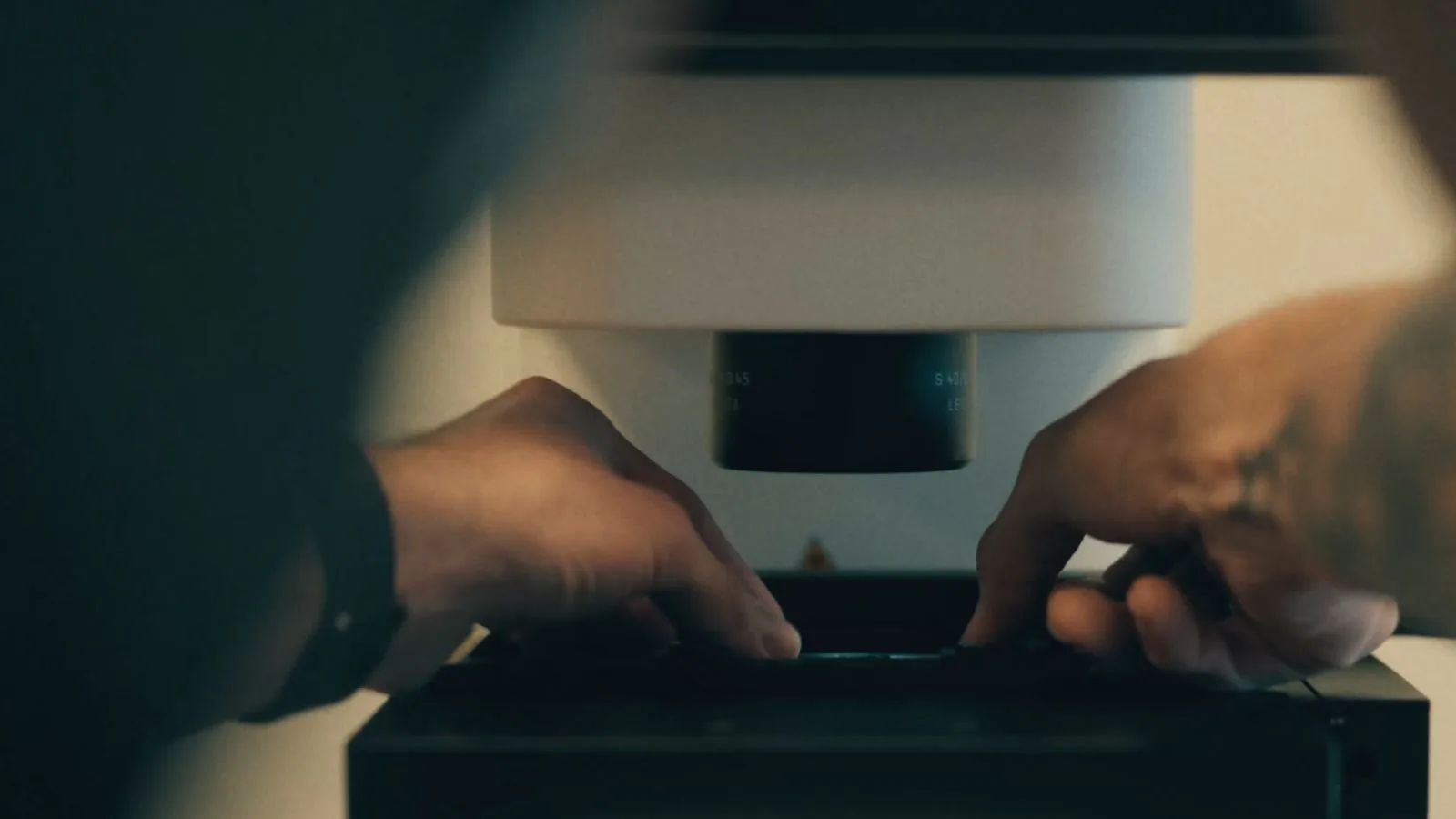
Anthropic on August 27, 2026 opened a research preview of the Model Hardware Standard (MHS), a shared specification that lets AI agents such as Claude safely operate physical laboratory and manufacturing devices. The project began as a collaboration between Anthropic and the HHMI Janelia Research Campus.
MHS standardizes device drivers around simple primitives such as "read" and "write" that any hardware can implement, making instruments discoverable in a common format. Agents receive machine characteristics through natural-language tags, and the standard automatically generates reference files describing each device's specifications, measurement capabilities, and safety limits. According to Anthropic, the standard works with any device that exposes a programmable interface, is model-agnostic, and is compatible with existing protocols such as the Model Context Protocol. Agents can control equipment through MCP, a command-line interface, or code-file APIs, letting a single command orchestrate several instruments at once.
Anthropic said the goal is to cut hardware integration time from weeks or months down to hours or minutes, while letting agents coordinate multiple instruments in parallel, adjust parameters in real time, and recover from errors autonomously.
Several early adopters tested the standard ahead of the preview. At Genentech, researchers used MHS to automate BCA protein assays, coordinating liquid handlers, robotic arms, and plate readers; Claude autonomously tuned fluid dynamics for liquids of different viscosities, though researchers said the model still needed guidance to troubleshoot bubble formation. At the University of Washington's Baker and Pinglay labs, a PhD student built a remote monitoring dashboard and an AI-supervised qPCR workflow with real-time curve analysis and collision-free robotic plate handoffs, cutting setup that had previously taken weeks down to under a week.
Carnegie Mellon University used MHS to run serial dilution dose-response experiments roughly three times faster, with the agent orchestrating four otherwise incompatible instrument interfaces and adjusting concentration ranges based on curve quality. At HHMI Janelia's Ahrens Lab, researcher Virginie Ruetten used MHS to unify seven vendor programs that previously had no shared interface, cutting integration time for new equipment from days to minutes and enabling closed-loop microscopy experiments for zebrafish sleep research. QuEra Computing applied MHS to quantum laser stabilization: an AI-developed recovery controller raised the success rate from a 58% baseline to 99.3% and cut recovery time from 150 seconds to six, later achieving a tenfold reduction in noise. Tetsuwan Scientific integrated MHS into its ResearchOS automation platform for qPCR workflows used to profile pollution in San Pedro Creek, testing 9,143 individual dispenses and improving pipetting-precision predictions by 12 to 17 percent over manufacturer specifications.
Anthropic acknowledged current limitations: Claude still struggles with physical and chemical reasoning without expert guidance, its understanding of hardware is largely programmatic, and it cannot work with devices that lack a programmable interface. Actions the system flags as risky require human confirmation, and safety limits are enforced at the MHS driver level. Anthropic said a broader physical-safety roadmap and dedicated safety evaluations are being developed together with launch partners.
On the adoption side, Anthropic named Amazon Web Services (through its Strands Robots project), Automata, Danaher, Doosan Robotics, MBF Bioscience, QIAGEN, Tecan, and Universal Robots as companies adding MHS compatibility, with Hugging Face's LeRobot library and Raspberry Pi listed as early adopters.
Comments
Be the first to join the conversation.